Everyday resistance
All the Light We Cannot SeeEveryday resistance in occupied Saint-Malo is presented not as a single dramatic uprising but as a collection of practical disruptions woven into work, neighborhood life, and shared routines. Organized by Madame Manec and carried out by local women, it turns familiar roles and objects into means of interference and communication. Its small scale is not a sign of insignificance: the women challenge occupation by acting where their everyday lives already give them access and leverage.
Definition and Setting
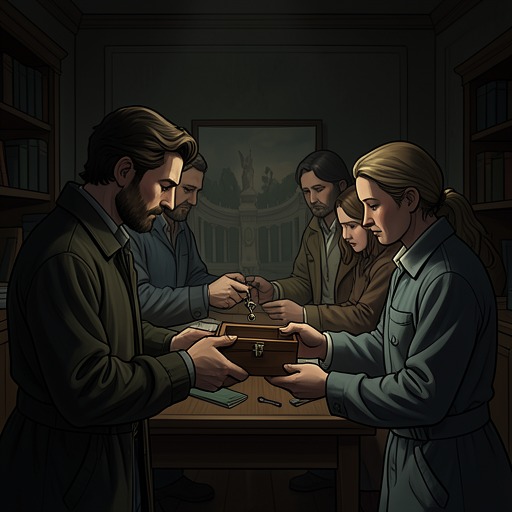
The resistance takes shape in the kitchen at Number 4 rue Vauborel, where Marie-Laure LeBlanc sits near the fireplace and listens as Madame Manec’s friends complain about daily conditions. Their grievances include an unfair exchange rate, indefensible carrot prices, and duplicity throughout the community. The meeting begins in ordinary frustration, but Madame Manec changes its direction when she deadbolts the kitchen door and calls the women to attention. Their conversation moves from what occupation makes difficult to what they might do about it.
Madame Manec grounds the idea of resistance in the women’s existing work. Madame Guiboux’s son repairs German shoes; Madame Hébrard and her daughter sort German mail; Madame Ruelle’s bakery supplies much of the occupiers’ bread. These jobs place the women within the machinery of everyday life under occupation. Madame Manec’s proposal does not require them to become someone else: it asks them to recognize that their familiar labor helps keep the occupying world running, and that the same position can give them ways to obstruct it.
Organization and Collective Method
The women’s resistance is collaborative and locally organized. In the account identified as the Old Ladies’ Resistance Club, Madame Manec’s kitchen functions as a gathering place for reports and plans. Participants return there to share what they have done, and Madame Manec provides drinks while someone keeps watch at the door. The meeting’s domestic setting and informal rhythms coexist with deliberate coordination: there are tasks, tools, targets, and a lookout.
The group’s actions draw on varied local knowledge rather than a single specialized skill. Madame Ruelle, the baker’s wife, and Madame Guiboux use a ratchet set to rearrange road signs along the Route de Carentan at dusk. A few days later, after Madame Fontineau hears that the German garrison commander is allergic to goldenrod, Madame Carré, the florist, places the plant in an arrangement bound for the château. The women also redirect a shipment of rayon and deliberately misprint a train timetable. Each action exploits a different point of access—roads, deliveries, transport information, or the routines of the garrison.
Disruption in Ordinary Things
Some acts aim to confuse or inconvenience; others turn everyday objects into carriers of resistance. Madame Hébrard removes an important-looking letter from Berlin and uses it to start her evening fire. Madame Fontineau reports tying up the château switchboard for an hour. Madame Guiboux says she helped her grandsons paint a stray dog in the colors of the French flag and send it through the Place Chateaubriand. The women report these episodes to one another with evident pleasure, measuring success in practical effects as well as shared amusement.
Madame Manec proposes a more widely circulating message through money. She asks the women to give their funds to Madame Blanchard, then lends her Etienne’s fountain pen and asks her to write Free France Now on every five-franc note. The plan depends on money continuing to pass from hand to hand: once people spend the bills, the message will travel across Brittany. The banknote remains useful as money while also carrying words opposed to occupation. Resistance here does not depend on a separate public platform; it is inserted into an ordinary exchange.
Information, Rules, and Everyday Pressure
The women’s actions occur in a setting where authorities seek to control information and movement. In Saint-Malo, an order requires residents to surrender radio receivers at 27 rue de Chartres before noon the following day and threatens arrest for anyone who fails to comply. The order makes the household radio a matter of public authority, not merely private property. Elsewhere, Frau Elena writes to a professor because broadcasts have gone unheard for at least two months. She wonders whether the station has stopped transmitting or whether reception has failed, while describing a powerful transmitter in Brandenburg that overwhelms other signals. Together these details show how communication depends on both the availability of equipment and the ability to receive a signal.
Other wartime details clarify the pressures that shape ordinary life without making every constrained action an act of resistance. Jutta writes to Werner about working in a laundry, mending uniforms and trousers with Hannah, Susanne, and Claudia Förster, amid shortages of fabric and fuel. In a later letter, Werner writes that even paper is difficult to obtain and that passages of his correspondence have been censored. These accounts show daily labor and communication narrowed by shortage and surveillance. The distinction matters: the novel depicts both deliberate acts of interference and the ordinary adjustments people make under pressure, rather than treating all survival as organized opposition.
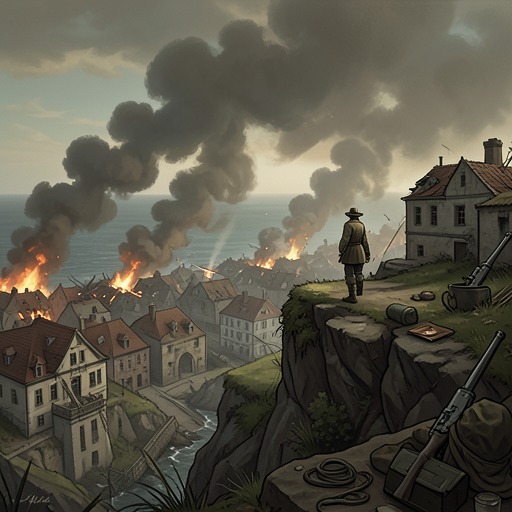
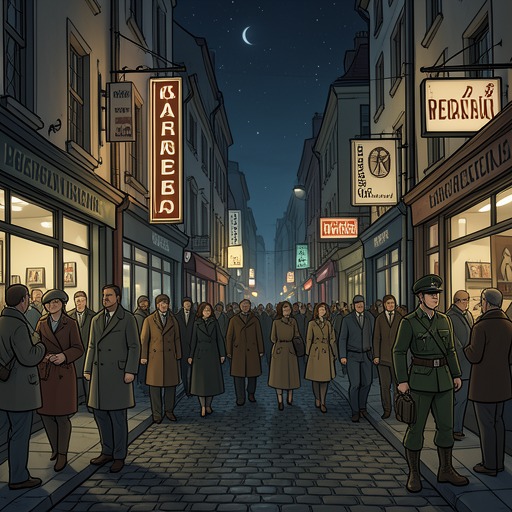
The threat of coercion is explicit. The radio-surrender notice threatens arrest, while a later report says men between sixteen and sixty are to assemble at the château tower and be marched to Fort National at low tide. Such orders establish the power behind the routines the women contest. Their methods are comparatively small, but they operate within a world where authorities can prescribe what residents surrender, where people must gather, and what may be communicated.
Significance
Everyday resistance in Saint-Malo is defined by the distance between the apparent modesty of an act and its wider reach. A misprinted timetable, a disrupted telephone switchboard, altered road signs, or a message written on money can interfere with occupation without resembling open combat. The women draw on work and neighborhood connections that are already part of the town’s daily operation, turning familiarity with those systems into a resource.
The kitchen meetings also make resistance a shared practice. Each report enters a collective record of action, and the sentry at the door marks the difference between private sociability and a gathering that must protect itself. Marie-Laure’s presence as a listener places this activity within her immediate household world, while Madame Manec’s leadership connects domestic space to a larger network of local action. The resulting portrait treats opposition not as a role reserved for a single heroic figure, but as a set of choices made by people whose ordinary positions can be redirected against the order they are expected to serve.